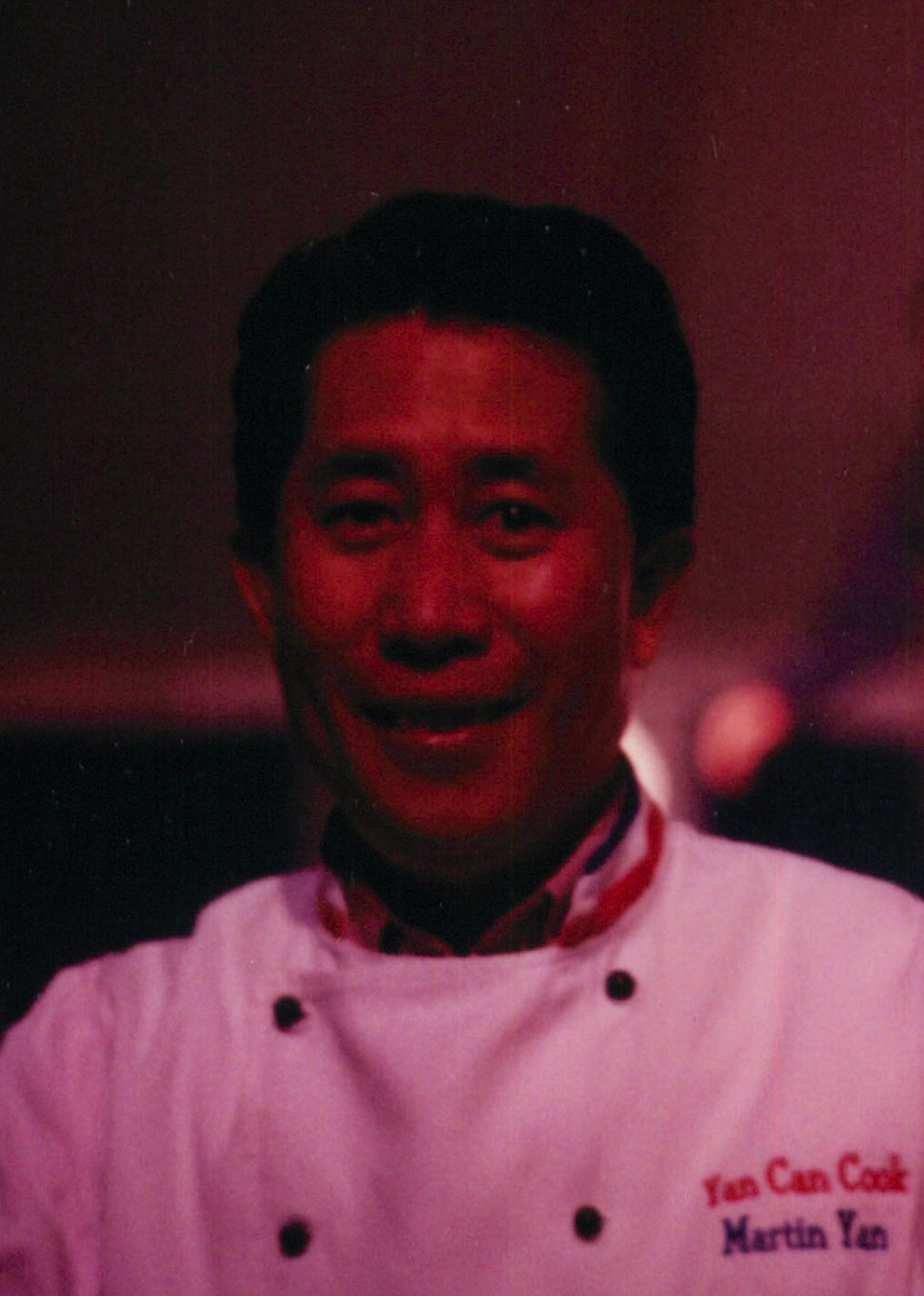
Martin Yan is the Chinese-American chef and television personality behind Yan Can Cook, the public-television cooking programme launched at KQED in 1982 and introduced generations of American viewers to Chinese home cooking. Born 22 December 1948 in Guangzhou, Guangdong Province, China, Yan trained at the Overseas Institute of Cookery in Hong Kong and holds a master’s degree in food science from the University of California, Davis. He has written more than 30 cookbooks and continues to appear on cooking television and at food-festival events across the United States and internationally as of 2026.
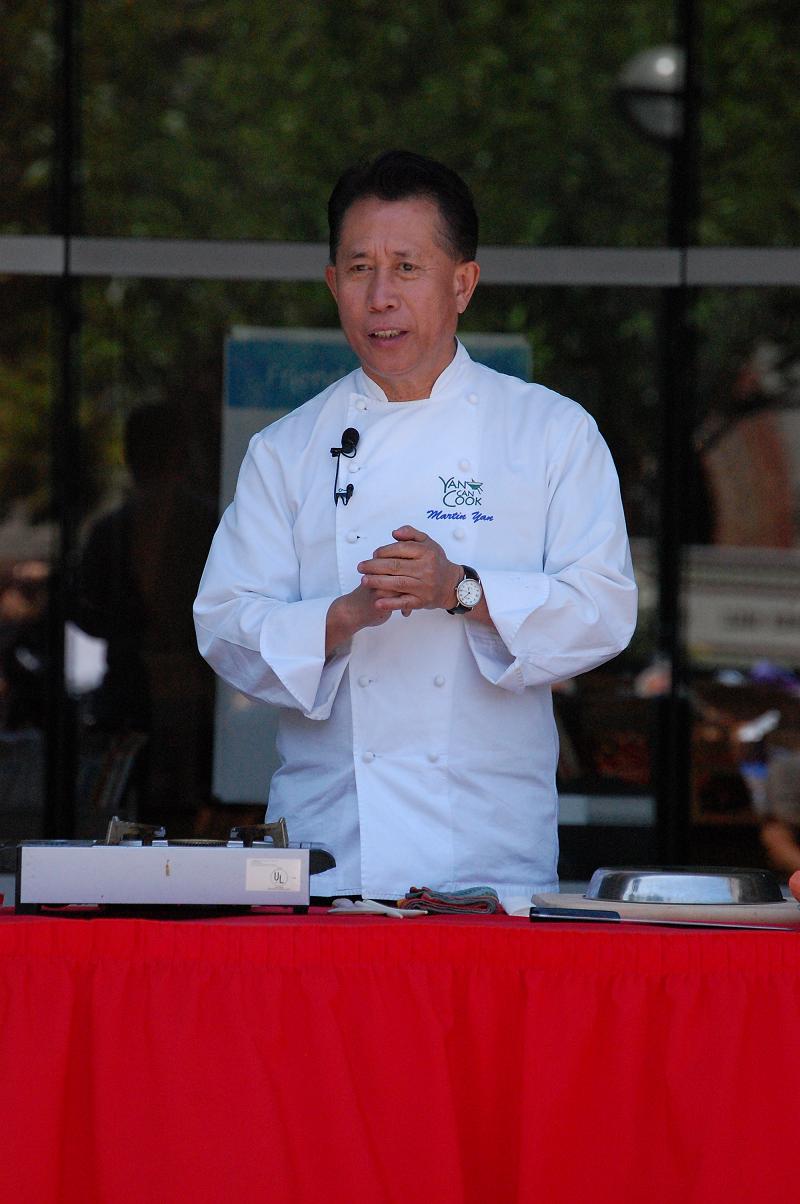
Yan continues sharing Chinese cooking through live demonstrations and Yan Can Cook with On Lok, a free virtual series. On Lok also provides recordings and recipes. Session dates should be checked with the organiser rather than treated as a permanent schedule.
TL;DR
- Chinese-American chef born 22 December 1948 in Guangzhou, Guangdong, China
- Trained at the Overseas Institute of Cookery in Hong Kong; master’s in food science from UC Davis
- Yan Can Cook launched on American public television in 1982
- Author of 30+ cookbooks including The Joy of Wokking and Martin Yan’s China
- 2022-present: Yan Can Cook with On Lok virtual cooking series
- James Beard Foundation Lifetime Achievement Award, 2022
Martin Yan key facts
| Born | 22 December 1948, Guangzhou, Guangdong Province, China |
| Nationality | American (Chinese-American; Hong Kong and US training) |
| Training | Overseas Institute of Cookery (Hong Kong); master’s in food science, UC Davis |
| Defining programme | Yan Can Cook, launched at KQED in 1982 |
| Current projects | Yan Can Cook with On Lok virtual series; live events; cookbook publishing |
| Cookbooks | More than 30, including The Joy of Wokking, Martin Yan’s China, Martin Yan’s Culinary Journey Through China |
| Lifetime honour | James Beard Foundation Lifetime Achievement Award, 2022 |
Early life and training of Martin Yan
Yan was born on 22 December 1948 in Guangzhou, the capital of Guangdong Province in southern China. His mother ran a small food stall, and his father died when Martin was very young. The Guangzhou and Cantonese culinary traditions of his childhood, built around fresh vegetables, seafood, roasted meats and the distinctive Cantonese approach to wok cookery, would shape his entire later career. As a teenager in the mid-1960s Yan moved to Hong Kong, which at that time was one of the major centres of Chinese restaurant cookery globally.
In Hong Kong, Yan worked at his uncle’s Chinese restaurant from age 13 before entering the Overseas Institute of Cookery, a prominent Hong Kong culinary school, where he trained in Cantonese and broader Chinese cookery techniques. He then moved to Canada in 1968 and to the United States shortly after, enrolling at the University of California, Davis, where he completed a master’s degree in food science. The food-science training is unusual among celebrity chefs and shaped Yan’s later approach to television cooking, which has always emphasised explanation of technique and ingredient science alongside recipe demonstration.
In the 1970s Yan hosted a local Calgary cooking programme, Yan Can Cook, that launched his television career. In 1982 the programme moved to PBS in the United States and began national distribution, making Yan one of the first Asian-American cooking-show hosts on American public television. UC Davis’s archive records more than 3,500 globally broadcast episodes across his television career.
Martin Yan career timeline
- 22 December 1948: Born in Guangzhou, Guangdong Province, China
- Early 1960s: Moves to Hong Kong; begins working at uncle’s Chinese restaurant from age 13
- Mid-1960s: Trains at the Overseas Institute of Cookery in Hong Kong
- 1968: Moves to Canada
- 1973 and 1977: Earns bachelor’s and master’s degrees in food science at UC Davis
- Late 1970s: Hosts Yan Can Cook on Calgary local television
- 1982: Yan Can Cook launches nationally on PBS in the United States
- 1979: Publishes The Joy of Wokking, one of his best-known cookbooks
- 1994: Receives the James Beard Award for Best TV Cooking Show
- 1995: Publishes Martin Yan’s Culinary Journey Through China
- 1998: Publishes Martin Yan’s Feast (PBS companion cookbook)
- 2004: Martin Yan Quick and Easy and its companion cookbook
- 2012: Opens M.Y. China at Westfield San Francisco Centre; it later closes in 2020
- 2020: M.Y. China closes during the COVID pandemic
- 2022: Launches Yan Can Cook with On Lok virtual cooking series
- 2024: Continues virtual cooking classes and food-festival appearances
- July 2025: Interview with V-On Air in Malaysia at Resorts World Genting
Martin Yan signature style: Cantonese technique through television
Yan’s central argument, developed across decades of public television, is that Chinese home cooking, especially Cantonese regional cookery, is approachable, technique-driven, and welcoming to American home cooks. The Yan Can Cook programme built on this argument episode by episode across 3,500+ sessions: a single wok, a simple ingredient list, a demonstration of technique (knife work, wok seasoning, stir-frying, steaming), and a finished dish that could be cooked at home. The approach introduced a generation of American viewers to Chinese cooking and is one of the most sustained cultural-ambassador projects in American food television.
The second defining element is the signature Yan knife technique, particularly his famed chicken-in-18-seconds cutting demonstration. Yan has demonstrated rapid knife work as a central visual element of his television programme for decades, and the knife demonstration has become one of the signature set pieces of American food television. Beyond the showmanship, the knife work reflects the technical grounding he received at the Overseas Institute of Cookery in Hong Kong.
The third pillar is the cookbook publishing output. Yan has written more than 30 cookbooks across his career, most tied to specific PBS programmes. The publishing output is one of the largest by any American cooking-show host of the past four decades and has distributed Chinese home cooking through American bookshops and libraries at scale. Yan sits alongside peers including Ming Tsai (Simply Ming) and Masaharu Morimoto (Iron Chef America) as part of the Asian-American television-chef cohort.
Notable Martin Yan dishes and work
Several Yan demonstrations have become reference points in American Chinese cooking education. The wok-fried beef with broccoli, the Cantonese roast duck with five-spice marinade, the classic Yangzhou fried rice, and the kung pao chicken are the signature Yan Can Cook repeat dishes across his television work. The chicken-in-18-seconds knife demonstration, featured repeatedly on Yan Can Cook, remains one of the most-cited set pieces in American food television. Yan cookbooks include The Joy of Wokking (1979), Martin Yan’s Culinary Journey Through China (1995), Martin Yan’s Feast (1998), and more than 25 additional titles. His work with Jacques Pepin on PBS cooking collaborations extended the public-television chef tradition across multiple traditions.
Recognition
Yan received the James Beard Foundation’s Lifetime Achievement Award in 2022. Earlier Beard awards recognised his television work in 1994 and 1996.
Martin Yan FAQ
How long did Yan Can Cook run?
Yan Can Cook launched at KQED in 1982 after Yan’s earlier Canadian television work. His broader career encompasses more than 3,500 globally broadcast episodes, according to UC Davis’s archive.
Where is Martin Yan from?
Yan was born on 22 December 1948 in Guangzhou, Guangdong Province, China. He trained at his uncle’s restaurant and the Overseas Institute of Cookery in Hong Kong before moving to Canada in 1968 and later to the United States, where he completed a master’s degree in food science at the University of California, Davis.
What is Yan Can Cook with On Lok?
A free virtual cooking series with the San Francisco nonprofit On Lok, celebrating Chinese recipes and traditions. On Lok’s website provides recipes, recordings and event information.
What is happening in 2026?
His public-facing work includes virtual cooking with On Lok and live demonstrations. Consult the organiser’s current listing for individual events and dates.
What is the famous chicken-in-18-seconds demonstration?
A signature Yan knife-work demonstration repeated across multiple Yan Can Cook episodes: butchering and cutting a whole chicken into serving pieces in approximately 18 seconds. The demonstration became one of the most-cited set pieces in American food television and reflects the knife-technique grounding Yan received at the Overseas Institute of Cookery in Hong Kong.
What is next for Martin Yan
See On Lok’s series page for cooking videos, recipes and event information, and Yan Can Cook for his own updates.
Sources checked November 2026: UC Davis’s Martin Yan archive; James Beard Foundation; On Lok; Chronicle Books’ 2004 television-companion book; KQED on the original M.Y. China opening; bibliographical reference.
